
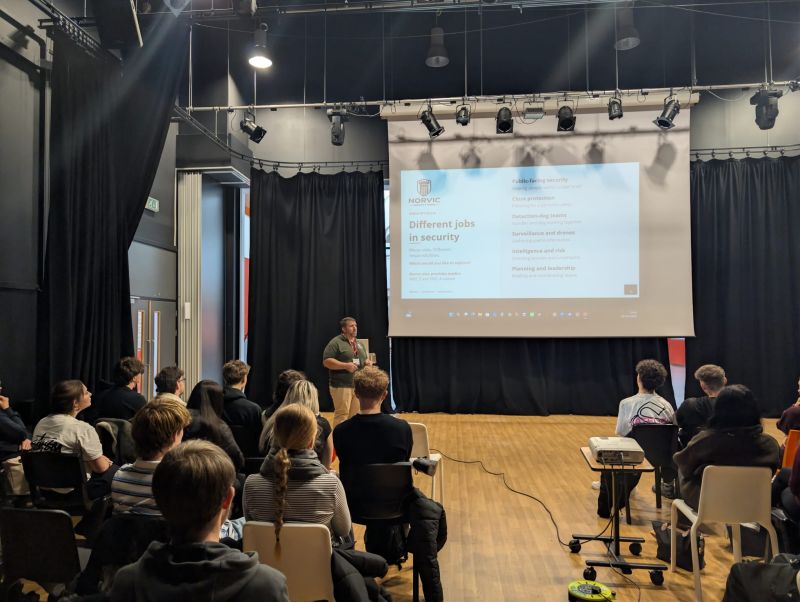
Fion Oakmur and Alistair Procter recently spent time with Public Services students in Lowestoft, introducing them to some of the different roles within the security industry. The visit offered an opportunity to share practical experience and help students consider how their interests and skills could translate into a future career.
At Norvic Security Group, we value opportunities to contribute to that early exploration. Choosing a career is easier when people can look beyond a job title and understand the responsibilities, preparation and personal qualities involved. Conversations with people working in a profession can help bring those questions into focus.
A wider view of the security profession
Security work takes place in many environments, from public-facing venues and events to commercial premises and specialist assignments. Different roles involve different responsibilities, working patterns and training requirements. There is no single route that suits every person interested in the industry.
For students, that variety is worth exploring before committing to a particular course or application. Someone who enjoys working with the public may be interested in different duties from someone drawn to monitoring, planning or technical work. Understanding those differences helps make career research more specific and useful.
Our Lowestoft visit was intended to give students a broader view of the profession. Sharing practical experience helps explain that security work calls for more than a visible presence. Professional conduct, preparation and the ability to respond appropriately to changing circumstances all matter.
Communication is a professional skill
Clear communication is relevant across the security industry. A member of the public may need directions, reassurance or an explanation of a procedure. A colleague may need an accurate update. A supervisor may need a concise account of something that requires attention.
Listening is part of that work. Understanding what someone is saying, checking details and responding respectfully can help prevent confusion. Written communication matters too, particularly when recording information that other people may need to rely on later.
Students can begin developing these habits in their studies, group activities and everyday responsibilities. Explaining a decision clearly, listening to another viewpoint and producing an accurate written account are useful skills well beyond a single occupation. They also provide a strong foundation for further professional training.
Judgement and teamwork support good practice
Security professionals need to understand their responsibilities and recognise the limits of their role. Sound judgement includes knowing when to seek assistance, follow an agreed procedure or escalate a concern. Confidence is useful when it is supported by competence and an understanding of those boundaries.
Teamwork is equally important. A person may be responsible for a particular position or task while still depending on accurate communication with colleagues. Reliable handovers, clear instructions and consideration for others help the wider team work effectively.
For anyone exploring a security career, these qualities deserve as much attention as the more visible aspects of the job. Being dependable, prepared and willing to learn can make a meaningful difference to professional development.
Understanding training and licensing
Anyone considering private security work should check the requirements for the specific activity they want to undertake. Some roles require a Security Industry Authority licence. The SIA's official guidance explains eligibility, checks and the qualifications needed for different licence types.
Applicants must be at least 18 to hold an SIA licence. Relevant front line licences also require the appropriate licence-linked qualification. Requirements differ between activities and can change, so prospective learners should check current GOV.UK guidance before selecting training or paying a provider.
A careers discussion is a useful introduction, but it does not replace the training, assessment or checks required for a particular role. Taking time to understand the route helps students make informed choices and ask the right questions about their next steps.
Useful questions for anyone considering security
A good starting point is to ask what the day-to-day work actually involves. Where does the role take place? What are the working hours? What responsibilities come with it? What training is required, and how is continuing development supported?
It is also worth thinking about personal strengths and areas to develop. Someone may already feel comfortable speaking with unfamiliar people but want to improve written reporting. Another person may enjoy structured tasks while needing more confidence in group communication. Recognising those differences makes development more purposeful.
Thank you to the staff and students
We appreciate the welcome from the college staff and students in Lowestoft. It was a pleasure to contribute to their learning and share an insight into the industry we work in.
Helping people discover opportunities they may not previously have considered is valuable in its own right. For students exploring security careers, our encouragement is to keep asking questions, use reliable guidance and build the professional skills that will support whichever path they choose.