
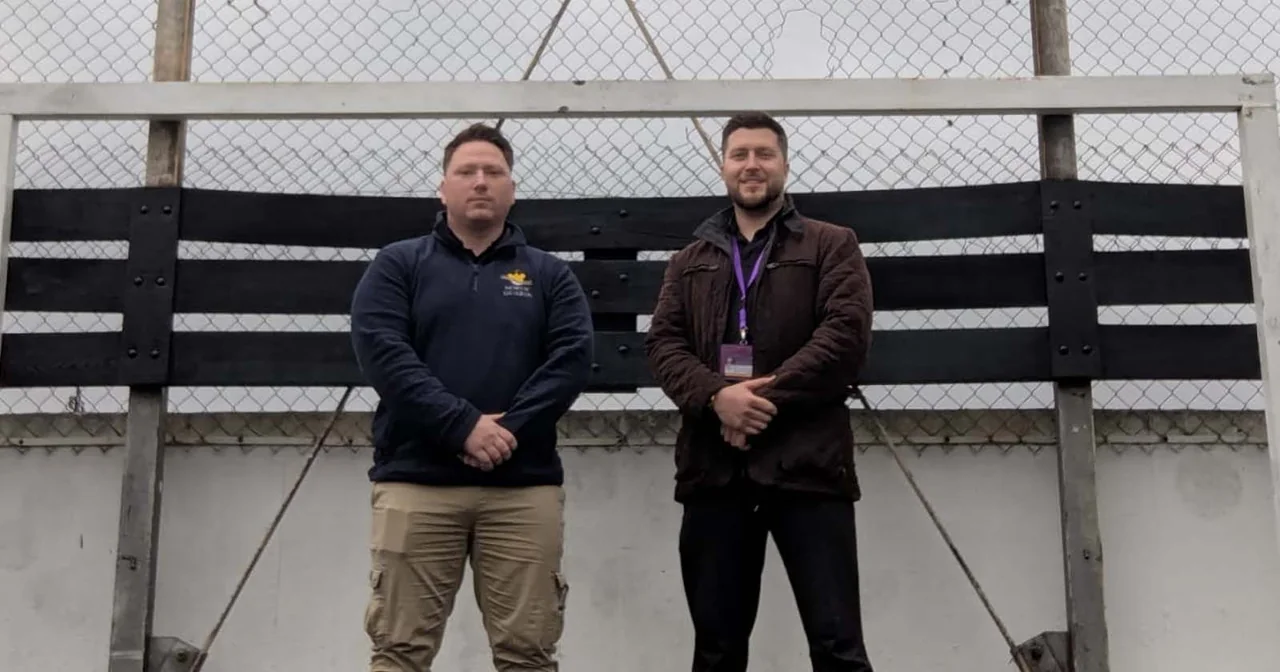
Yesterday, Norvic Guards partnered with Propads Health & Safety Consultants to travel to London and take part in detailed discussions around how health and safety and professional security work hand-in-hand, not as separate services, but as complementary disciplines.
What became clear very quickly is that when these two areas are aligned properly, organisations benefit from safer environments, stronger compliance, and more resilient operations.
Why Security and Health & Safety Should Never Be Isolated
Security teams are often the first people on-site to identify risks — whether that’s unsafe behaviour, access control issues, overcrowding, poor lighting, or inadequate emergency procedures. At the same time, health and safety frameworks provide the structure, documentation, and legal compliance that turn those observations into action.
When security and health & safety operate independently, risks can fall between the cracks. When they work together, those same risks are identified earlier, managed properly, and resolved faster.

Shared Focus Areas Identified in London
During discussions, we identified several sectors where a combined approach delivers immediate value:
Schools and educational environments
Security visibility supports safeguarding, access control, and incident response, while health and safety ensures compliance, risk assessments, and staff protection. Together, they create safer learning environments for students and staff alike.
Sports facilities and leisure venues
Crowd management, emergency planning, and site control are most effective when security operations are aligned with health and safety policies. This is particularly important during peak usage, events, and competitions.
Commercial and public-facing spaces
From visitor management to emergency response procedures, a joined-up approach improves consistency, accountability, and overall safety standards.
Why This Partnership Matters
Norvic Guards brings operational, on-the-ground security expertise. Propads brings specialist health and safety consultancy, compliance knowledge, and risk management frameworks. Together, this partnership allows both teams to:
- Identify risks earlier
- Reduce duplication of effort
- Improve communication between departments
- Provide clients with a clearer, more cohesive safety strategy
- Deliver solutions that are practical, compliant, and realistic
Rather than clients needing to coordinate multiple providers independently, this collaboration allows for a more streamlined and effective approach.
Looking Ahead
The London discussions marked the beginning of a collaborative approach that we intend to develop across multiple sectors, including education, sports, commercial sites, and public venues.
By aligning security operations with health and safety principles from the outset, organisations can move away from reactive responses and towards proactive, preventative safety planning.
This partnership represents a shared commitment to raising standards, not just meeting requirements, but exceeding them.
Start with the interfaces
A useful joint review looks at places where one team’s work affects another. An access arrangement may influence how contractors enter a working area. A queue may change how visitors move around the premises. A temporary delivery route may affect an entrance used by staff. Discussing those interfaces helps people understand the consequences of a decision beyond their own immediate task.
The aim is not to make every professional responsible for every discipline. Clear boundaries remain important. Security personnel can identify an observation and pass it to the appropriate person, while specialist advisers consider matters within their competence. Cooperation works best when people know both how to contribute and when another person needs to take the lead.
Agree a usable reporting route
When an issue is identified, the report should explain what was observed, where it occurred and who has been informed. Avoid assuming that a concern has been resolved simply because it has been mentioned in a conversation. A clear owner and follow-up arrangement make it easier to track what happens next.
For a changing site or event, briefings should reflect the current layout and activities. A document prepared before a change may no longer describe the situation accurately. Sharing relevant updates helps prevent one team from working to instructions that another team has already replaced.
Review practical outcomes
After a project or event, discuss which arrangements helped people work together and which caused uncertainty. Were contacts available? Did reports reach the right person? Were responsibilities clear when the plan changed? These questions can produce useful improvements without turning a review into an exercise in assigning blame.
Our December 2025 post recorded the London discussions with Propads and the intention to develop that collaboration. The sectors named in the original report were areas of shared interest, rather than a list of new contracts already secured. Future assignments and the scope of any combined service must be agreed individually.
For organisations considering a review, begin with a description of the site, the people using it and the difficulties you want to address. Norvic can discuss the security element and how it should coordinate with other relevant professionals. A shared understanding is a practical foundation for safer operations.
A review should leave the organisation knowing which actions matter, who will take them forward and when progress will be discussed together again.