
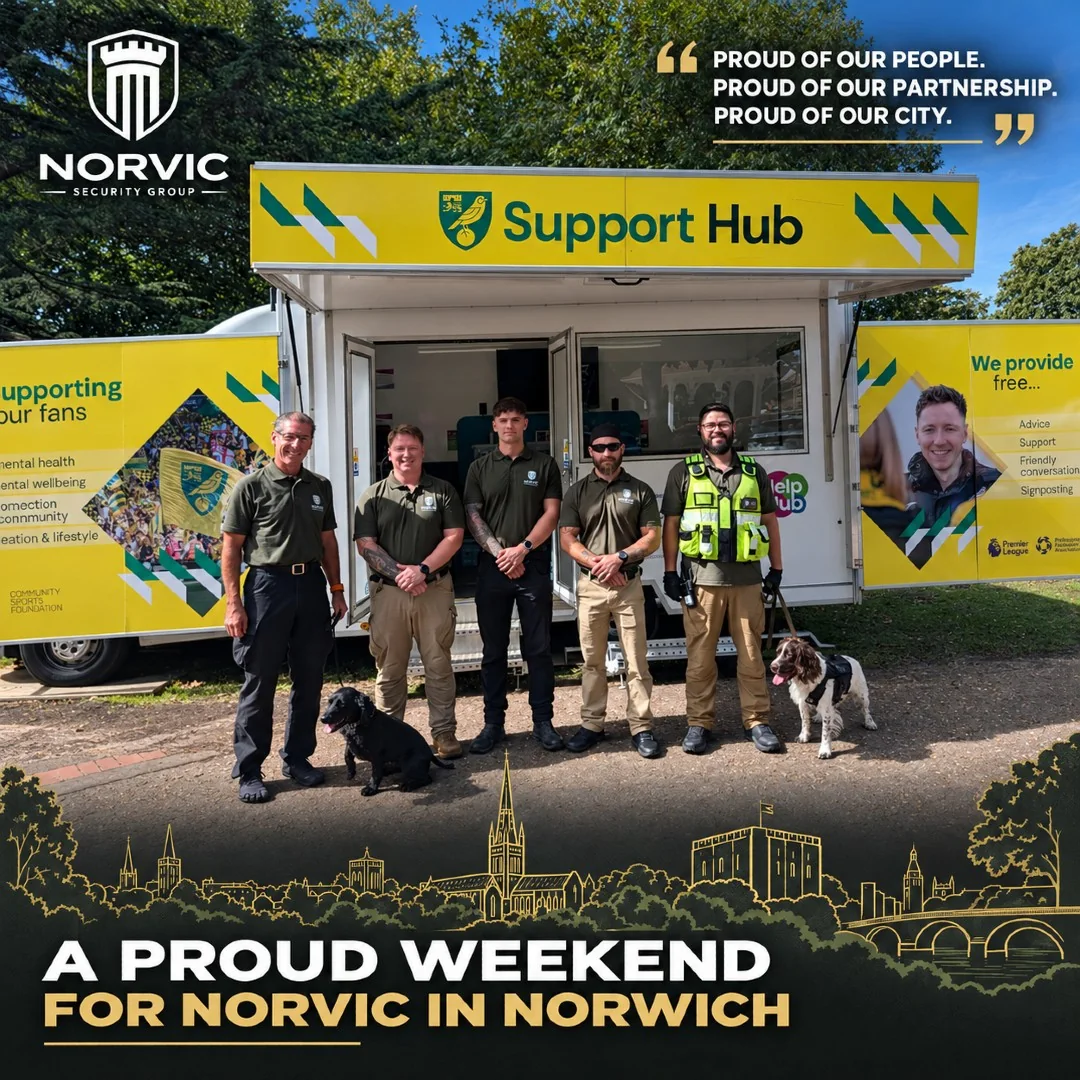
Run Norwich 2026 brought runners, spectators, volunteers and event teams together in our home city on 6 September. Across the Expo, race-day and follow-up posts, Norvic described its involvement as part of the wider security operation, with explosive detection dog teams and Behavioural Detection Officers supporting the event. Bringing those posts together provides a fuller account of the occasion, while keeping our role distinct from the work of the organisers and other contributors.
A weekend rooted in Norwich
The build-up included the Run Norwich Expo at The Forum on 4 and 5 September. Our announcement invited visitors collecting race numbers to meet the Norvic team and learn about our work. An Expo gives an event a different rhythm from race day: people have time to ask questions, share their plans and experience the anticipation of taking part. It also creates an opportunity to meet the community around the occasion.
Our posts connected that presence with our partnership with Norwich City Community Sports Foundation. The event matters beyond its route and finish line because of the community work it supports. For a Norwich-based business, involvement in a home-city event carries a meaning. The people enjoying the occasion may be neighbours, colleagues and families we encounter through everyday local life. That connection makes the responsibility feel close to home.
Specialist search within a wider operation
Norvic’s race-day account described explosive detection teams operating before and during the event. A dog team is a specialist capability, with a handler, a defined task and reporting arrangements. It contributes to a wider operation rather than replacing every other protective measure. Each search task benefits from an understanding of the environment, the purpose of the work and a clear connection with those responsible for coordinating the event’s protective arrangements.
The practical value of specialist support depends on integration. Organisers and existing security teams need to know the purpose of a deployment and how relevant information reaches the people making operational decisions. The principle applies when several capabilities are present. An event should have a shared understanding of responsibilities, even where different organisations bring different experience. For visitors, the resulting operation should feel coherent rather than like several unrelated teams working nearby.
Observation guided by the environment
Our Behavioural Detection Officers added another layer to the support described in the posts. The account explained the importance of understanding normal activity and assessing behaviour that may justify professional engagement. That approach depends on context and sound judgement. It does not mean drawing conclusions about people from their appearance, background or membership of a community. Respectful observation and appropriate escalation belong together in any public-facing environment.
At a running event, many unfamiliar behaviours can have ordinary explanations. Someone may be searching for a friend, trying to find a meeting point or feeling anxious about the challenge ahead. A professional response needs to recognise that human context. Our follow-up emphasised calm and discreet delivery. The aim was to contribute to protection while allowing runners, spectators and volunteers to focus on the occasion they had come to enjoy.
Credit belongs across the event
Run Norwich is delivered through the efforts of many people. Our posts thanked the Foundation, organisers, volunteers, emergency services, security personnel and others working behind the scenes. Norvic’s involvement should be read within that shared effort. Specialist support is one contribution to a much broader operation, and recognising the work of other teams is part of describing an assignment accurately. A successful public event rarely belongs to one organisation alone.
The runners themselves were central to our follow-up. Reaching the start line can represent months of preparation, a personal challenge or support for a cause. Spectators and volunteers help create the atmosphere that makes that effort memorable. Security teams should remain attentive to those ordinary reasons for being there. Protecting an event includes understanding its purpose and treating the people taking part with the consideration that purpose deserves.
Carrying the experience forward
Our September account described Run Norwich as a proud milestone for the team. It brought specialist capabilities into a major occasion in the city where Norvic is based and strengthened the connection between our operational work and community partnership. The occasion brought our people into contact with runners, visitors and those delivering the event, connecting specialist work with the wider purpose of the day. Those experiences help give future planning conversations a focus.
For organisers considering specialist support, the useful starting point is their own event. Explain its location, timing, public interaction and existing arrangements, then discuss what a capability would be expected to contribute. Norvic can help explore that requirement without assuming another event needs the same deployment. Our thanks remain with everyone who contributed to Run Norwich, and our congratulations with the runners who made the streets of our city their challenge that weekend.


