
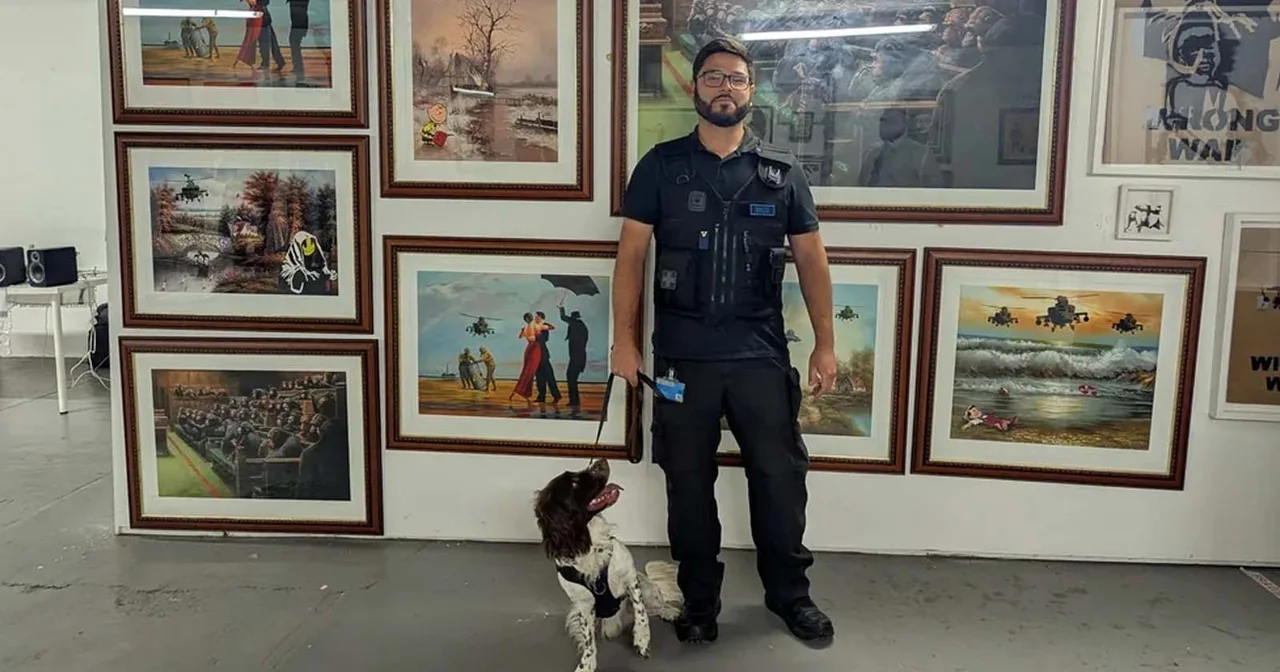
Norvic’s earlier social announcements introduced our detection-dog capability as part of a developing specialist security service. Those posts explained the value of considering dog teams within event, venue and asset-protection planning. This updated article sets out how that conversation should work: start with the requirement, agree the search objective and understand how the dog team fits into the wider operation. A specialist resource is most useful when its purpose is clear.
Define the task first
An explosive detection dog team provides a particular search capability. An enquiry should describe the setting, the areas or items under consideration and the timing of the proposed work. A venue preparing to open, a delivery process and an event already in operation may present different practical requirements. The handler needs enough information to assess whether and how the proposed task can be supported.
The brief should also explain what happens after a search. Who receives the report? Who controls access to the area? How are changes communicated? A search has limited practical value if the surrounding arrangements are unclear. Discussing these questions early allows the specialist team and the organiser to understand their respective responsibilities before deployment.
People and capability together
A dog and handler operate as a team. Relevant training, experience and suitability need to be considered for the assignment, alongside the practical conditions in which the team will work. Customers should ask for appropriate evidence and discuss the proposed scope directly. General statements about a service do not replace checks relevant to a particular team or deployment.
Working arrangements should also account for welfare, rest and the environment. A busy venue can involve noise, movement, changing surfaces and competing activity. Those conditions belong in the planning discussion. Treating a dog team as an unlimited resource throughout an event overlooks the practical management needed for a considered operation.
Agree the response process
The organiser and provider should establish how a concern will be communicated and who will manage the next steps. Personnel need to understand their roles within the agreed response procedure. A specialist indication should be handled through that procedure, rather than improvised around a crowd or discussed publicly before the situation has been assessed.
This article does not provide a search or emergency-response manual. Detailed operational procedures belong with the competent people responsible for the assignment. For clients, the important planning question is whether the response arrangements are clear and coordinated. The presence of a specialist team should make the wider plan more coherent, not introduce uncertainty about who is in charge.
A layer within a wider plan
Dog teams can be considered alongside access management, observation, staff awareness and other relevant measures. No individual capability guarantees that an environment is free from risk. Nor should a team be described as automatically replacing a fixed number of search personnel. The work, environment and objectives determine what support is appropriate.
Different detection disciplines must also be distinguished. Explosives detection, drugs detection and general-purpose security dog work are not the same service. An enquiry should identify the actual requirement so the correct capability can be discussed. Welfare arrangements, venue policy and the supporting personnel may differ depending on the task.
Martyn’s Law and proportionate planning
Martyn’s Law concerns public protection procedures and, for certain premises and events, additional measures. It does not create a blanket requirement for every venue to hire detection dogs. The SIA’s current guidance should be consulted to understand the legislation and its implementation. A dog deployment, demonstration or training certificate should not be presented as automatic proof of compliance.
For an organisation considering protective security, the useful starting point is its circumstances and responsibilities. Specialist support may form part of an appropriate approach, but the decision should follow an assessment of need. Avoid buying a visible capability simply because it appears reassuring without understanding what task it will perform.
From demonstration to discussion
A capability discussion can help a venue understand the questions involved in planning a deployment. Where a demonstration is requested, its suitability, scope and availability need to be confirmed. A demonstration is an introduction to the service, not a substitute for considering the requirements of a real assignment.
Historical prices in older announcements should not be treated as a current quotation. Use our current enquiry route to discuss timing, location, duration and the support required. Any proposed service should be confirmed with its scope and commercial terms before it is booked.
Norvic welcomes enquiries from venues, organisers and security providers seeking specialist dog support. Tell us what you are planning and what you need the team to achieve. We can then discuss the appropriate capability, the information required and the practical next steps for your operation. An early conversation gives the organiser time to clarify responsibilities and understand how specialist support would fit the wider plan.