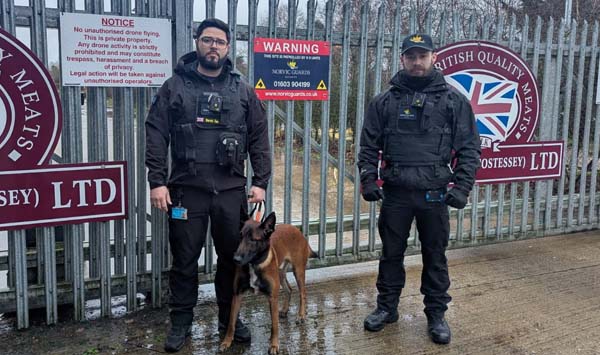
In March 2026, Norvic worked alongside Time Team, providing asset-protection support for a production project. Our social update described the responsibility for safeguarding valuable equipment and maintaining a controlled working environment. We were pleased to contribute to a project within the film and television sector and to recognise the team’s work. The account focuses on that published role, keeping the project’s location, detailed arrangements and other operational information private.
Production has its own rhythm
A production environment can involve people arriving for different tasks, equipment moving between working areas and schedules that change as the day develops. Security support needs to understand that rhythm. Its purpose is to help the operation continue within the agreed arrangements, with the right people able to do their work and a clear process for dealing with unexpected activity.
For an organiser planning similar support, a useful brief explains what needs protecting and how the production uses the site. Equipment storage, contractor access and the transition between working and non-working periods may all require discussion. The security provider should understand the intended task before proposing staffing or specialist resources. A generic description of “site cover” can leave important questions unanswered.
Protect equipment without obstructing work
People working on a production need access to the equipment and spaces relevant to their jobs. A security arrangement should distinguish authorised activity from something requiring further checking. That depends on reliable information from the production team, not on an officer recognising every person by sight. Clear contacts make it easier to resolve uncertainty courteously.
A change in the programme can affect those arrangements. A supplier may arrive at a different time or equipment may be moved to another area. Personnel should know how changes are confirmed and communicated. The aim is to support the operation while maintaining the controls that have been agreed, rather than treating the original schedule as fixed when the production has moved on.
Clarify responsibility at handover
The end of a working period can leave a site in a different condition from the one described at the start. Equipment may remain in place, contractors may still be present and outstanding tasks may carry into the next day. A handover should explain the situation actually being transferred, including any matters that require attention.
The receiving team needs an understood reporting route and enough information to recognise expected activity. Sensitive detail should be shared only with those who need it for the assignment. A good handover is selective and practical: it helps the next person understand their responsibility without circulating the entire production’s information unnecessarily.
Discretion is part of the service
Production work can expose personnel to material that is not ready for public release. That might include the subject of a project, the people attending or images from a working area. Security support should respect the client’s communications arrangements. A photograph that looks harmless to an individual may reveal information the production has not chosen to publish.
Our Time Team update recorded the existence and nature of our contribution. It did not publish the operational brief or claim responsibility for every element of production security. Maintaining that boundary allows us to explain the kind of work Norvic supports while respecting the people and organisations involved. A useful case study does not need to reveal everything.
Coordinate with the wider team
Security personnel work alongside the production’s own management and other suppliers. Each should know where their responsibilities begin and end. Agree who can issue instructions, who handles changes and how an urgent concern is raised. Those arrangements are particularly useful when several organisations are represented on the same site.
A clear reporting style also helps. Describe what was observed, distinguish confirmed information from assumptions and identify any action already taken. The person receiving a report may be managing several competing demands. Concise, accurate information allows them to understand the matter and involve the appropriate colleague without having to untangle an unclear account.
Review the support provided
After an assignment, the production team and provider can discuss whether the arrangements matched the requirement. Were access questions resolved efficiently? Did handovers contain the information needed? Did changes reach the people affected? These are practical measures of a working relationship, alongside the broader requirement to protect assets and support continuity.
We take pride in the opportunity to have supported Time Team and in the contribution described by our March post. For producers or location teams considering security support, an early conversation can clarify the setting, schedule and scope. Tell Norvic what needs protecting and how your operation works. We can then discuss the people, preparation and communication needed to support the project appropriately, with discretion throughout the enquiry and assignment. Clear responsibilities and a reliable handover help the production team understand what support is in place throughout the assignment.