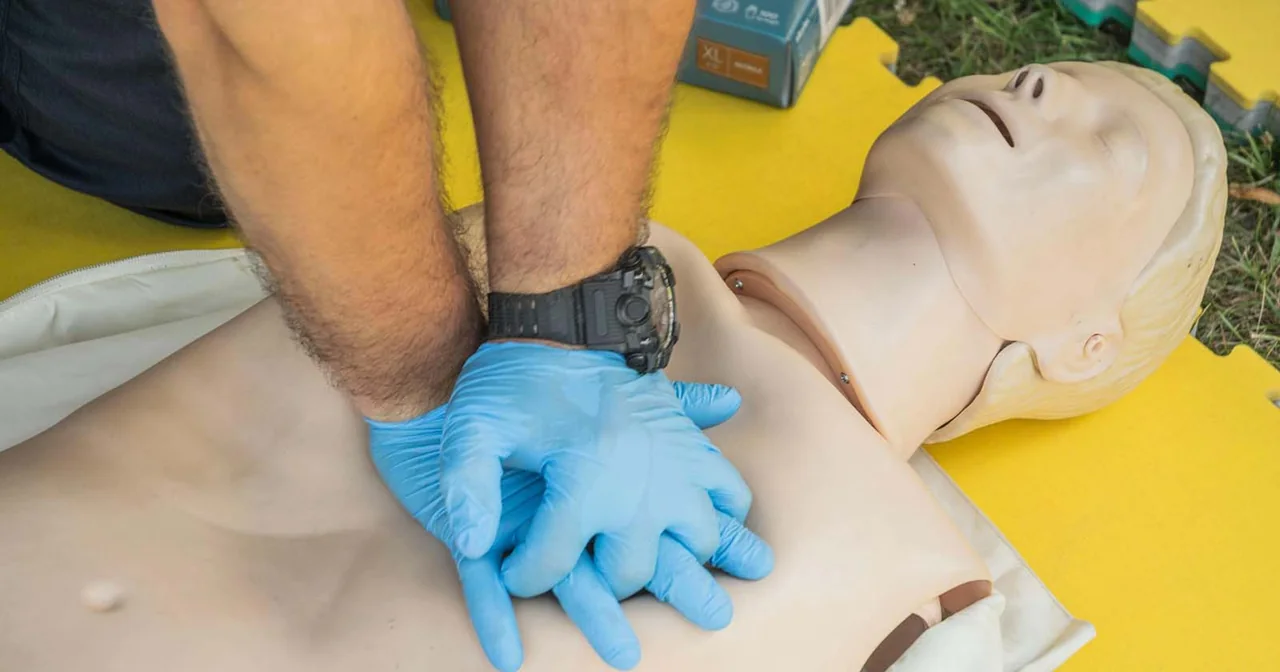
Security personnel often work where people arrive, gather and ask for help. If someone becomes unwell or is injured, an officer may be among the first people aware of the situation. First-aid training therefore matters alongside observation, communication and the other responsibilities of an assignment. At Norvic, our published approach has emphasised first-aid knowledge as part of professional preparation. The qualification and role required should always be confirmed for the particular person and deployment.
Understand the actual qualification
“Level 3” describes a qualification level; it does not describe one universal set of clinical skills. Emergency First Aid at Work, First Aid at Work and other qualifications have different content and purposes. The HSE distinguishes emergency workplace first aid from the broader First Aid at Work syllabus. A client should ask about the named qualification, its validity and its relevance to the role being proposed.
It would be misleading to assume that every Level 3 certificate includes oxygen administration or advanced trauma care. Those capabilities need their own appropriate training, competence and arrangements. Equally, an SIA licence is not a medical qualification. A clear brief should distinguish the security duties, any first-aid responsibilities and any separately commissioned medical provision, rather than treating them as interchangeable.
Preparation before the shift
Training becomes more useful when the team understands the place where it will work. Personnel need to know how assistance is requested, how locations are described and which colleagues or services should be contacted. They should also understand the arrangements for accessing relevant equipment within their role. These are questions for the briefing, not details to discover for the first time during an incident.
The event organiser or site manager should make the wider response arrangements clear. A security officer may have other duties that cannot simply be abandoned without coordination. Planning should explain how those responsibilities are covered when someone needs assistance. That helps avoid a situation where responding to one concern creates an unmanaged gap elsewhere in the operation.
Clear communication supports a response
Accurate information helps the appropriate people understand what is happening and where they are needed. A caller should be able to describe the location using references that make sense to someone arriving from outside the site. Multiple entrances, temporary layouts and locked access points can complicate an otherwise straightforward direction. Agreeing a common description beforehand reduces avoidable uncertainty.
A team also needs an understood handover process. Information should be relevant, factual and passed through the appropriate route. Personal details deserve discretion, particularly in public spaces where visitors can overhear a conversation. Good reporting supports continuity without turning a person’s difficult experience into material for unnecessary discussion or a public update.
Work within the agreed role
First-aid training does not turn a security officer into a paramedic. Personnel should work within their competence and follow the arrangements applicable to their role. Where further help is required, involving the appropriate service is part of a professional response. Clients benefit from clear expectations about the support being commissioned and the limitations that remain.
The presence of a trained officer also does not automatically establish that all first-aid needs have been met. Employers and event organisers need to consider their own requirements and suitable provision. Staffing, opening hours, activities and the people attending can all affect that discussion. A security contract should fit within the wider plan rather than replace it by assumption.
Developing Norvic’s wider support
Our July 2025 social announcement described an early step towards Norvic First Responders and welcomed an Emergency Medical Technician to the team. It also outlined plans for training. That post is part of our development history. It should not be read as confirmation that every officer has the same qualification or that every proposed service was already operating.
Current enquiries about FREC 3 and FREC 4 personnel can be made through our Medics page. Course enquiries belong with the Training Academy. Personnel qualifications, delivery arrangements and the scope of support are confirmed for the requirement. Keeping those routes clear helps customers distinguish learning opportunities from operational staffing and from the broader medical arrangements an event may need.
Keep learning current
A certificate is one part of preparedness. People also need opportunities to refresh relevant knowledge, ask questions and become familiar with local procedures. Supervisors can help identify where confidence has faded or where a change in the working environment requires another briefing. A learning culture encourages questions before uncertainty becomes a problem.
For your next enquiry, tell Norvic about the setting, activities, timing and responsibilities you want support with. We can discuss the relevant security and medical support routes and clarify what needs to be agreed. The aim is practical preparation: capable people, understood roles and a response plan that works with the wider operation. Clear expectations help everyone prepare for their responsibilities.